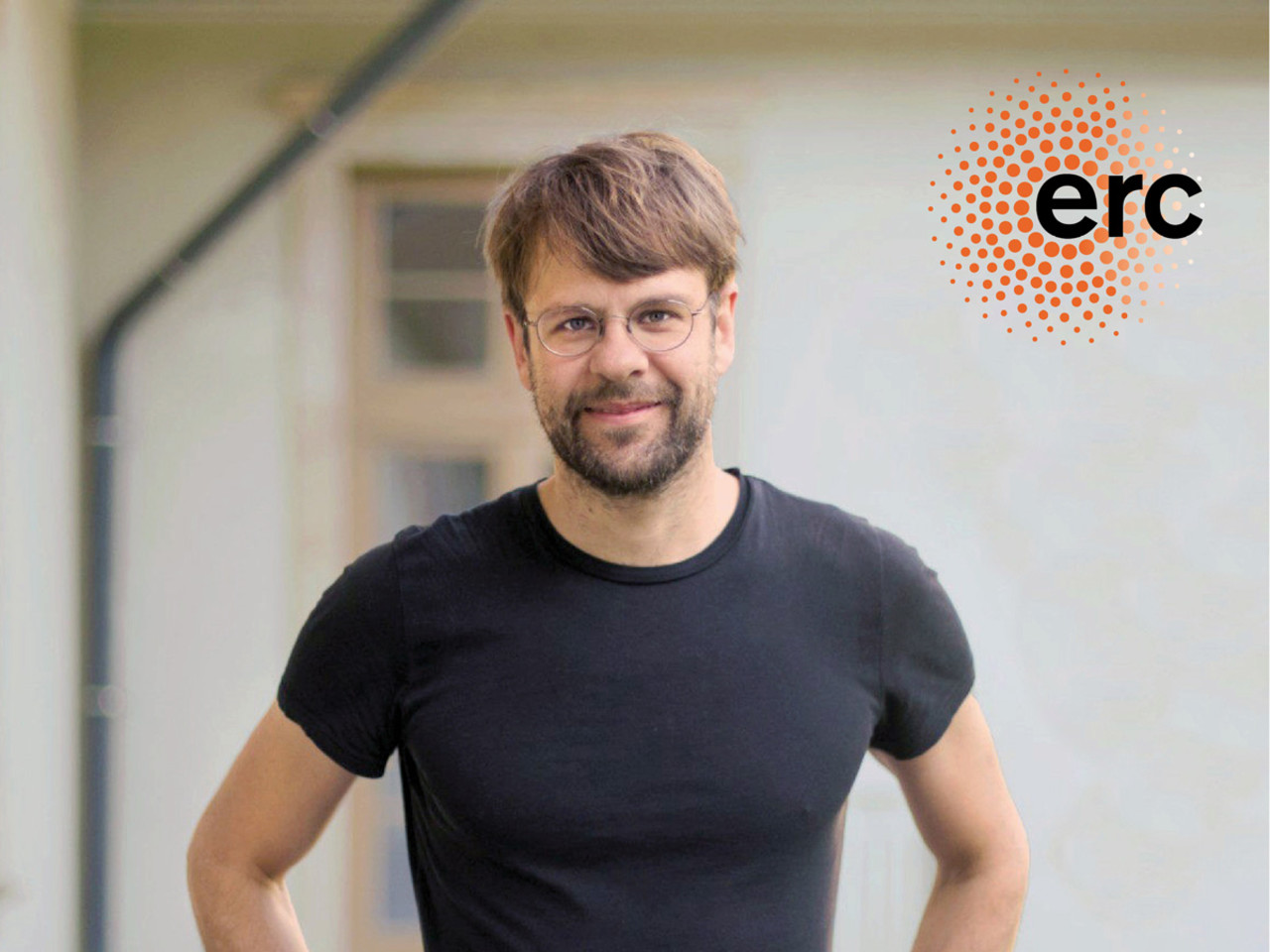
The NEWXUAR project examines how families cope with repressive state policies. – A New Normal After the Camps? State–kinship Dynamics in Minoritised Communities in Xinjiang Uyghur Autonomous Region has been awarded a prestigious Consolidator grant by the European Research Council (ERC). The project is led by Rune Steenberg from the Faculty of Arts at Palacký University Olomouc and focuses on changes in the everyday lives of minorities in the Xinjiang region, including the Uyghurs, Kazakhs, and Hui minorities which face long-term pressure from the state.
"The NEWXUAR project treats kinship relations as the key to understanding the transformation of society under the influence of the state. The project will employ remote ethnography and other hybrid methods that take into account the ethical boundaries and security risks associated with conventional field research," explains the project's principal investigator, Rune Steenberg from the Faculty of Arts at Palacký University in Olomouc.
Remote ethnography combines online research with insights from diasporas and border areas of the region under study. Publicly available data, from television series to government regulations, serve as a basis for creating an accurate picture of a region where researchers are not allowed access or where their work would be distorted by state oversight. All sources are thoroughly verified and compared to avoid distortion of reality and to ensure the credibility of the findings. In the context of global instability and new forms of warfare in regions out of reach of independent media, this method can be used worldwide, and its importance is likely to grow.
"The success of the NEWXUAR project is the result of the faculty's long-term strategic efforts to support excellent research in the social sciences and humanities. I am proud of my colleague Rune Steenberg. His current project builds on previous results in MSCA CZ and his twinning project REMOTE XUAR. It confirms the effectiveness of our faculty's targeted and highly individualized support system, where we strive to reach out to researchers and offer them help and support, rather than the other way around," adds Faculty Dean Jan Stejskal.
The UP Faculty of Arts offers systematic support for international excellence grants. Thanks to this support, young researchers from UP regularly receive Marie Skłodowska-Curie Actions projects, which are also supported by the Czech state through the allocation of funds from European structural funds. The support system is team-based, says ERC consultant and Research Culture Manager Petra Vaculíková: "Project preparation is based on genuine cooperation and sharing, and a supported project is a success for the entire faculty. About thirty people from the faculty (from researchers to technicians to students) contributed to the project proposal in various ways, as did a dozen external experts, mostly from Prof. Strakoš's team from the Expert Group for the Support of Applicants in ERC Calls. We owe them all our thanks."
The success rate of applications in the current ERC Consolidator call was 11.3 %; out of 3,121 projects, 349 were supported. Two projects were supported in the Czech Republic, both in the field of anthropology. The second project was awarded to the Institute of Ethnology of the Czech Academy of Sciences, which has already received a similar project several times and ranks among the world's leading institutions.
The supported project demonstrates the ability of researchers from the Czech Republic to achieve excellent results even in the same field at different institutions across the Czech Republic. This year's results show that Czechia can hold its own in the most prestigious European competitions in the field of social sciences and humanities and that systematic support for researchers is bearing fruit.
The success rate of applications in the current ERC Consolidator call was 11.3 %; out of 3,121 projects, 349 were supported. Two projects were supported in the Czech Republic, both in the field of anthropology. The second project was awarded to the Institute of Ethnology of the Czech Academy of Sciences, which has already received a similar project several times and ranks among the world's leading institutions.
The supported project demonstrates the ability of researchers from the Czech Republic to achieve excellent results even in the same field at different institutions across the Czech Republic. This year's results show that Czechia can hold its own in the most prestigious European competitions in the field of social sciences and humanities and that systematic support for researchers is bearing fruit.