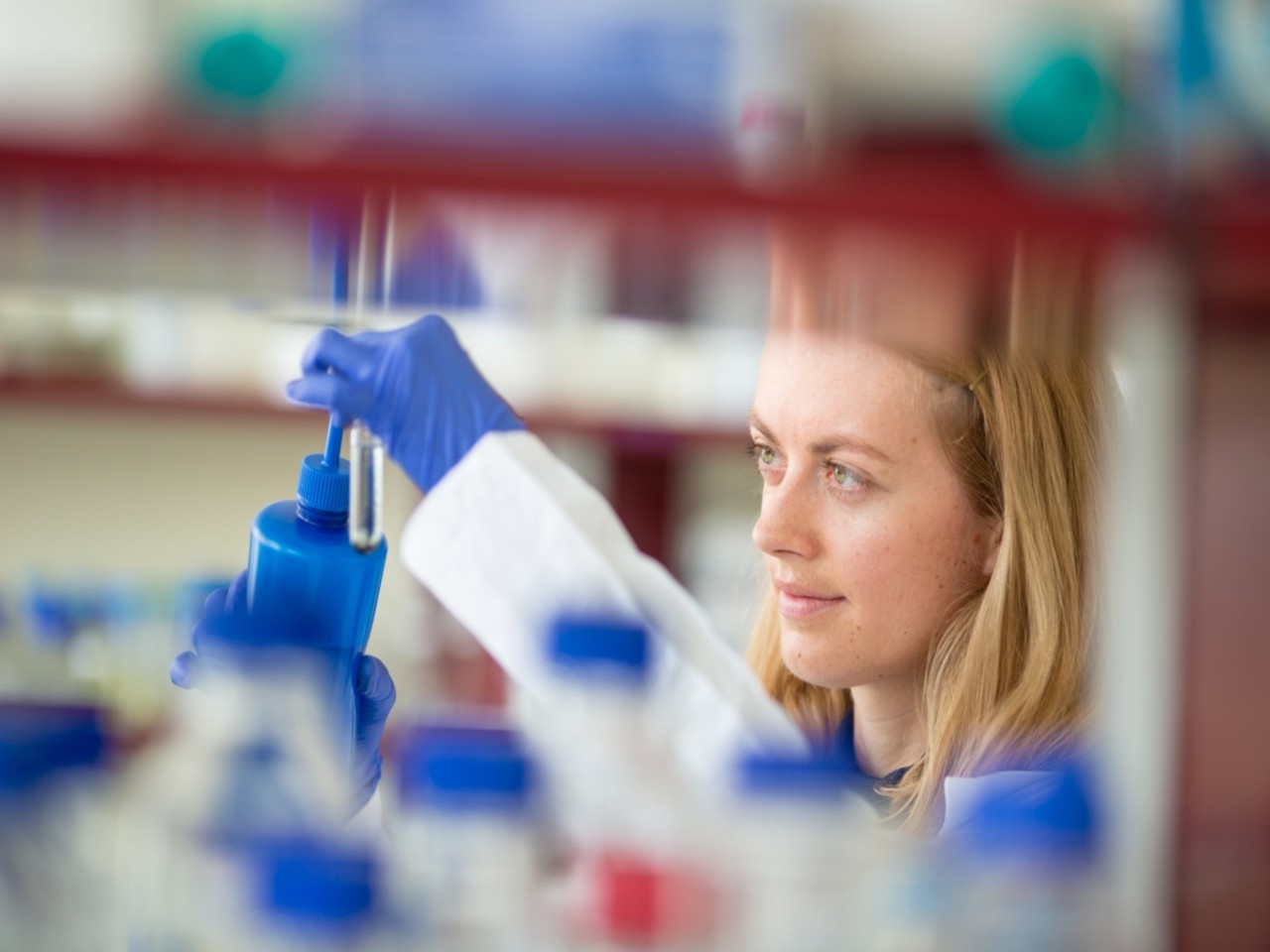
Kristýna Zelená Pospíšková from the Environmental Nanotechnologies research group at CATRIN will focus on developing a new generation of biochar-based nanocomposites produced from biomass to improve their efficiency and broaden their practical use in environmental technologies. Her three-year research project has received fundingfrom the Palacký University KaMos– Return Grants programme.
Biochar-based composites represent modern and environmentally friendly materials produced through the thermal processing of biomass and its subsequent modification so that the resulting materials can effectively capture or decompose harmful substances from water or soil. By combining biochar with reactive nanoparticles or with surface-bound isolated atoms of selected metals, it is possible to obtain materials with high efficiency, stability and selectivity towards a wide range of contaminants. Worldwide, such materials are emerging as a promising alternative to more expensive or less sustainable sorbents and catalysts.
“The project focuses on developing a new generation of biochar nanocomposites prepared from both readily available and waste biomass. Together with my colleagues, I will synthesise and modify these materials using advanced methods, comprehensively characterise them and test their performance in the treatment of both model and real contaminated waters. Promising systems may subsequently serve as a basis for follow-up applied research or future innovations in the field of environmental decontamination,” explained the researcher.
The Palacký University Return Grants programme is intended for researchers and doctoral students returning to research after a career break due to parenthood, illness or caring for a close family member. Its aim is to facilitate the return to research, support the long-term sustainability of scientific careers and promote equal opportunities in academia.
“After my three-year career break due to parenthood, this call represented a unique opportunity to effectively build on my previous research activities, further develop them and fully re-engage in research within our group,” said the grant recipient.
In the past, she has focused extensively on the preparation of various types of composite materials for environmental applications (sorbents for contaminant removal) and bioapplications (carriers for enzymes and cells), with particular emphasis on their magnetic separation. In recent years, her research has concentrated on the development of composite (nano)materials based on biochar combined with metal nanoparticles and their oxides or sulfides, which form within the porous matrix during the pyrolysis of impregnated biomaterials. Selected materials have already been successfully applied in the removal of problematic organic and inorganic contaminants, as enzyme-mimicking catalysts and as photocatalytically active composites.
The project, with a budget of CZK 6.1 million, will enable the researcher to build on her previous work, renew existing collaborations and establish new partnerships, particularly within the V4 Biochar Platform, which brings together Czech and international scientists working on biochar-based materials.