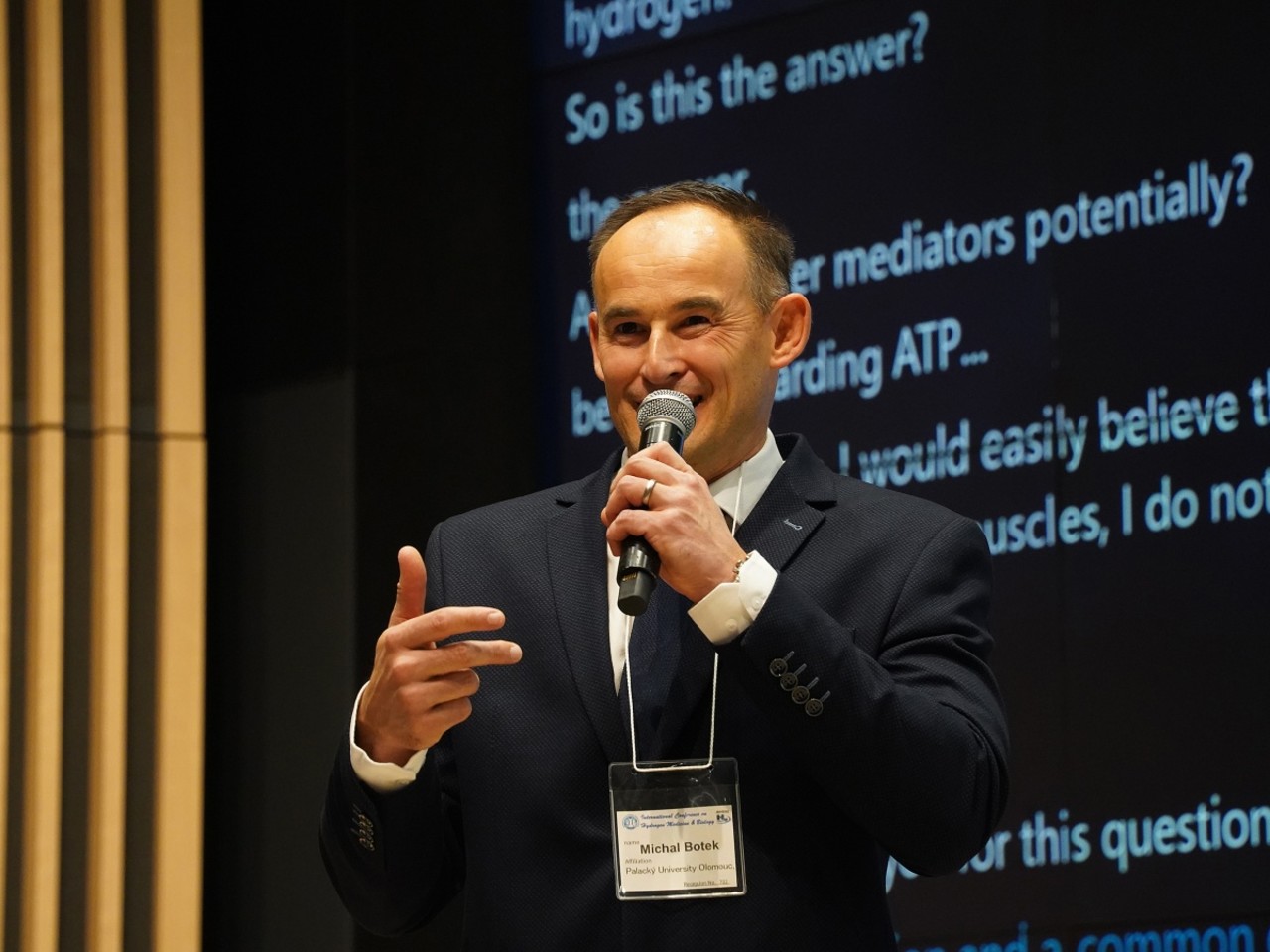
For nearly a decade, the effects of molecular hydrogen on the human body have been systematically researched at the Faculty of Physical Culture of Palacký University Olomouc by Michal Botek and his research team. The international relevance of their work was recently underscored by an invitation to the annual conference of the International Society for Hydrogen Medicine and Biology (ISHMB), held this year in Japan—the birthplace of hydrogen research. At the conference, Michal Botek received an award from the Society in recognition of his contribution to the field and delivered a keynote lecture as one of the event’s main speakers.
The conference took place in November in Tokyo and brought together academics, researchers, physicians and other experts from 28 countries, including Japan, China, the United States, France, Russia and Slovakia. Participants presented and discussed the latest findings in hydrogen-related research.
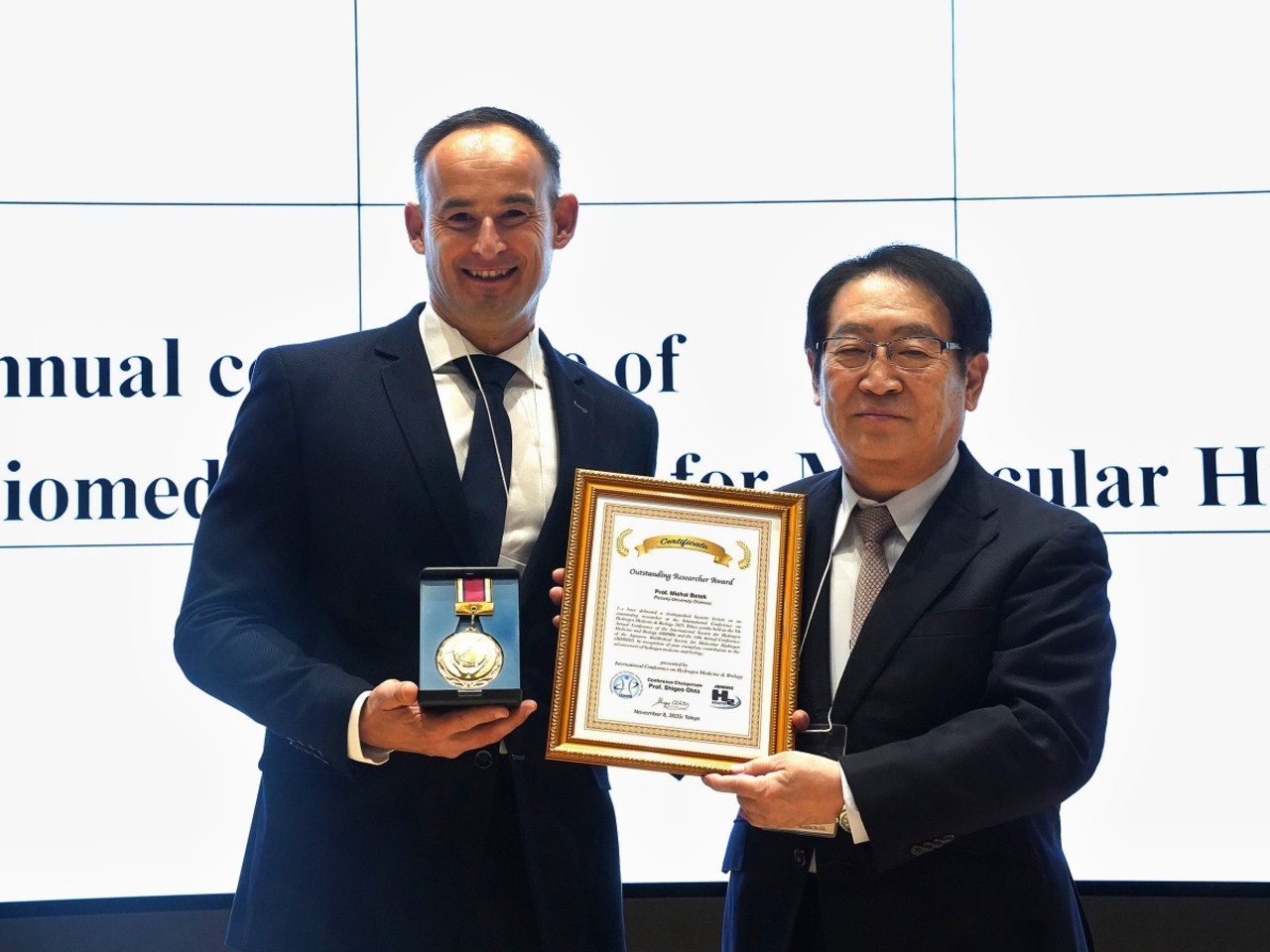
“I greatly appreciate both the invitation and the award. I was genuinely surprised that the Honorary President of ISHMB, Professor Shigeo Ohta, invited me as the only keynote speaker from Europe, alongside three speakers from Japan and China. Each keynote speaker represented a specific area of hydrogen research, and I believe that such a prestigious invitation confirms that our work at the Faculty of Physical Culture—focused on the effects of molecular hydrogen in the context of physical load, sport sciences and health promotion—places us among the leaders in this field. Our findings are particularly valuable and authentic because we test our hypotheses on human participants, an approach that is highly regarded by international experts,” said Michal Botek from the Department of Natural Sciences in Kinanthropology at the Faculty of Physical Culture. He added that he was very grateful for the opportunity to present his team’s results at such a highly prestigious forum.
“Our research findings are particularly valuable and authentic because we test our hypotheses on human participants. International experts appreciate this approach.” Michal Botek
During his fifty-minute keynote lecture, Michal Botek discussed the positive effects of molecular hydrogen supplementation on athletic performance and fatigue reduction. He also presented results from a study on post-COVID-19 recovery (previously reported here) and a study focusing on spa patients with rheumatic conditions (more information here). In addition, he introduced recently completed but as yet unpublished research, including studies examining the effects of regular hydrogen water consumption on reducing muscle soreness in trained football players, as well as the impact of prophylactic hydrogen administration on muscle function during plyometric training.
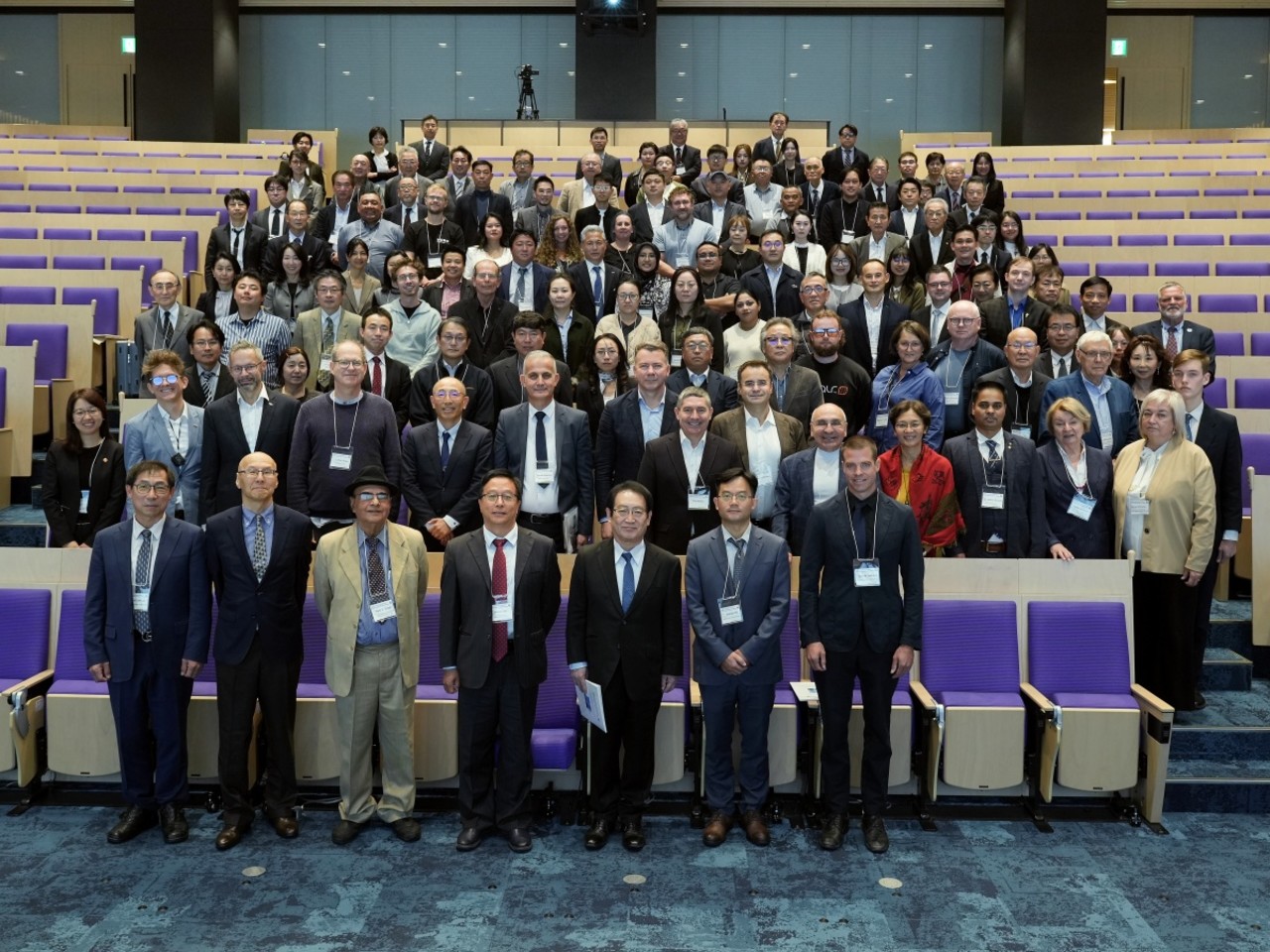
“I presented an overview of our work, and the audience response was extremely positive. Many participants approached me afterwards to express their enthusiasm for the research directions we are pursuing at the Faculty of Physical Culture and the results we are achieving. I believe I was able to demonstrate to the international hydrogen research community that our work in sport sciences meets a high scientific standard and that we can play a meaningful role in future collaborative research projects. I also returned from Japan with several promising professional contacts,” added Michal Botek, who is one of the founding members of the European Academy for Molecular Hydrogen Research in Biomedicine.
For a long time, molecular hydrogen was considered physiologically inert and ineffective. However, at the beginning of this millennium, its antioxidant, anti-inflammatory, anti-apoptotic and signalling properties were demonstrated. Its use has proven to be safe, with no known side effects, and it is currently believed that overdosing is not possible. As a result, molecular hydrogen has begun to be used in the treatment of certain chronic diseases, and its effects on the human body have also attracted growing interest in sports medicine, where it helps reduce fatigue, accelerate recovery and, under specific conditions, enhance physical performance. Japan is regarded as the cradle of molecular hydrogen research, with Professor Shigeo Ohta considered the founder of so-called hydrogen biomedicine. At the Faculty of Physical Culture of Palacký University Olomouc, research into molecular hydrogen—including its application in sport—has been underway since approximately 2016.