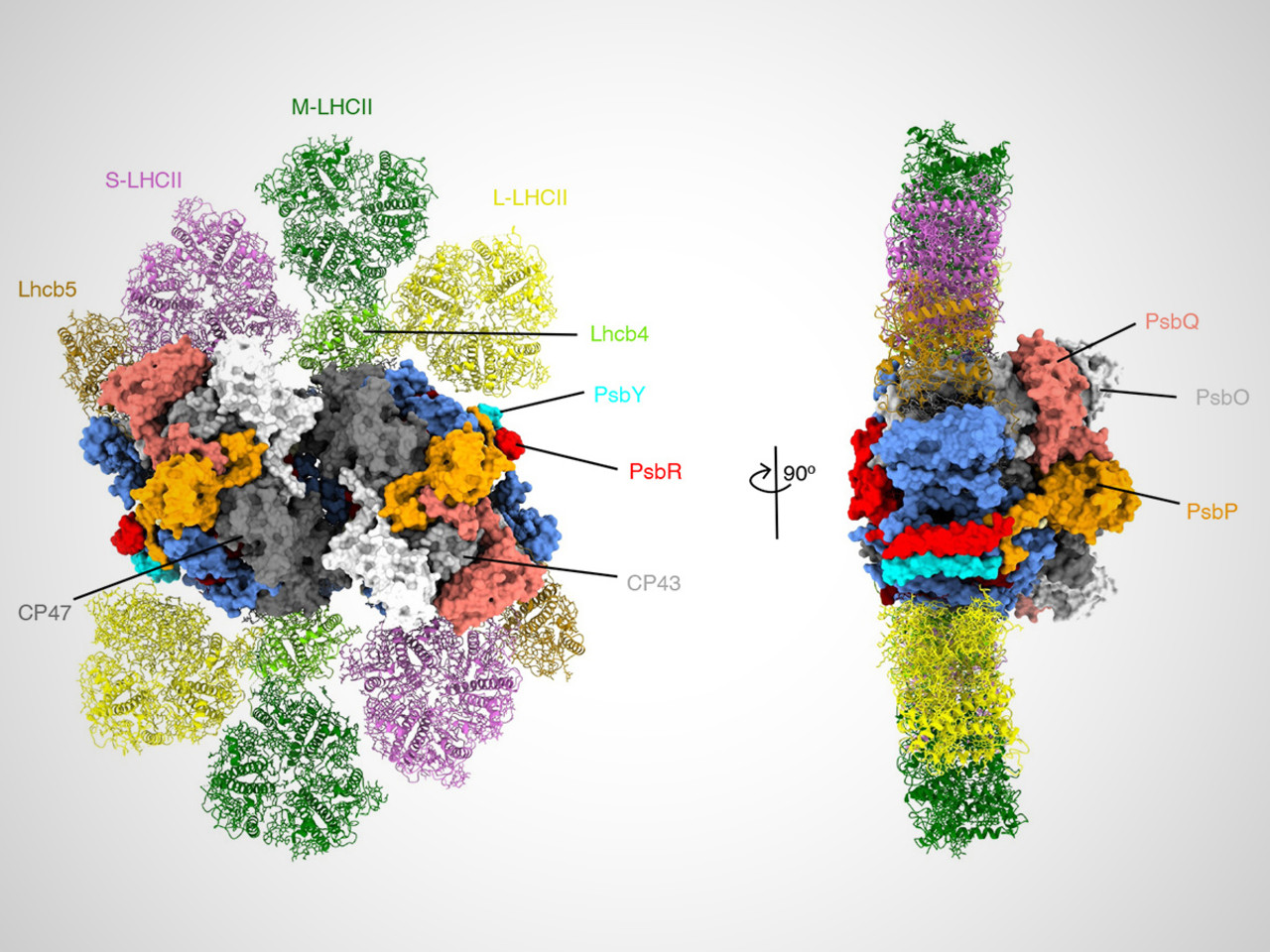
Scientists describe the structure of photosystem II in green algae with extreme resistance to high light intensity
Olomouc (February 4, 2026) – An international team of scientists has described in detail the structure of photosystem II in the green microalgae Chlorella ohadii and revealed the mechanisms that enable this organism to survive and function effectively even under extremely high light intensity. Photosystem II is a key protein complex in photosynthetic organisms that converts light energy into chemical energy. The results of the research, which involved experts from the Department of Biophysics at the Faculty of Science, Palacký University Olomouc (UP FS), were published in the prestigious journal Nature Communications.
Using cryogenic electron microscopy, the researchers obtained a highly detailed structure of the photosystem II supercomplex. The analysis revealed an unusual arrangement of light-harvesting proteins that differs significantly from the structures known in higher plants and in most other algae. According to the scientists, this arrangement allows for more efficient regulation of the flow of excitation energy and protects the photosynthetic apparatus from damage at higher light intensities.
"Our results show that the photosystem II of this microalga is structurally optimised for environments with extremely variable light conditions. We have identified specific structural elements that are likely responsible for its extraordinary phototolerance," said corresponding author Roman Kouřil from the Department of Biophysics at the Faculty of Science.
Link to the article:
https://www.nature.com/articles/s41467-025-65861-2
The results of the study also provide new insights into the evolution of photosynthetic complexes. The structure of photosystem II in Chlorella ohadii combines features known from various groups of photosynthetic organisms with completely unique elements. According to Roman Kouřil, this suggests that the photosynthetic apparatus may have repeatedly adapted to extreme environmental conditions throughout evolution through relatively subtle yet functionally significant changes.
"A better understanding of these adaptive mechanisms is key to basic research on photosynthesis and may also inspire biotechnological applications," added lead author Rameez Arshad from the Department of Biophysics at the Faculty of Science.
The research involved experts from the Department of Biophysics and the Department of Experimental Biology at the Faculty of Science, Palacký University Olomouc, as well as scientists from Martin Luther University Halle-Wittenberg, CATRIN UP, Czech Agrifood Research Center, CEITEC of Masaryk University, and Vrije Universiteit Amsterdam. It was precisely this interdisciplinary collaboration that made it possible to link detailed structural results with their biological and functional significance.