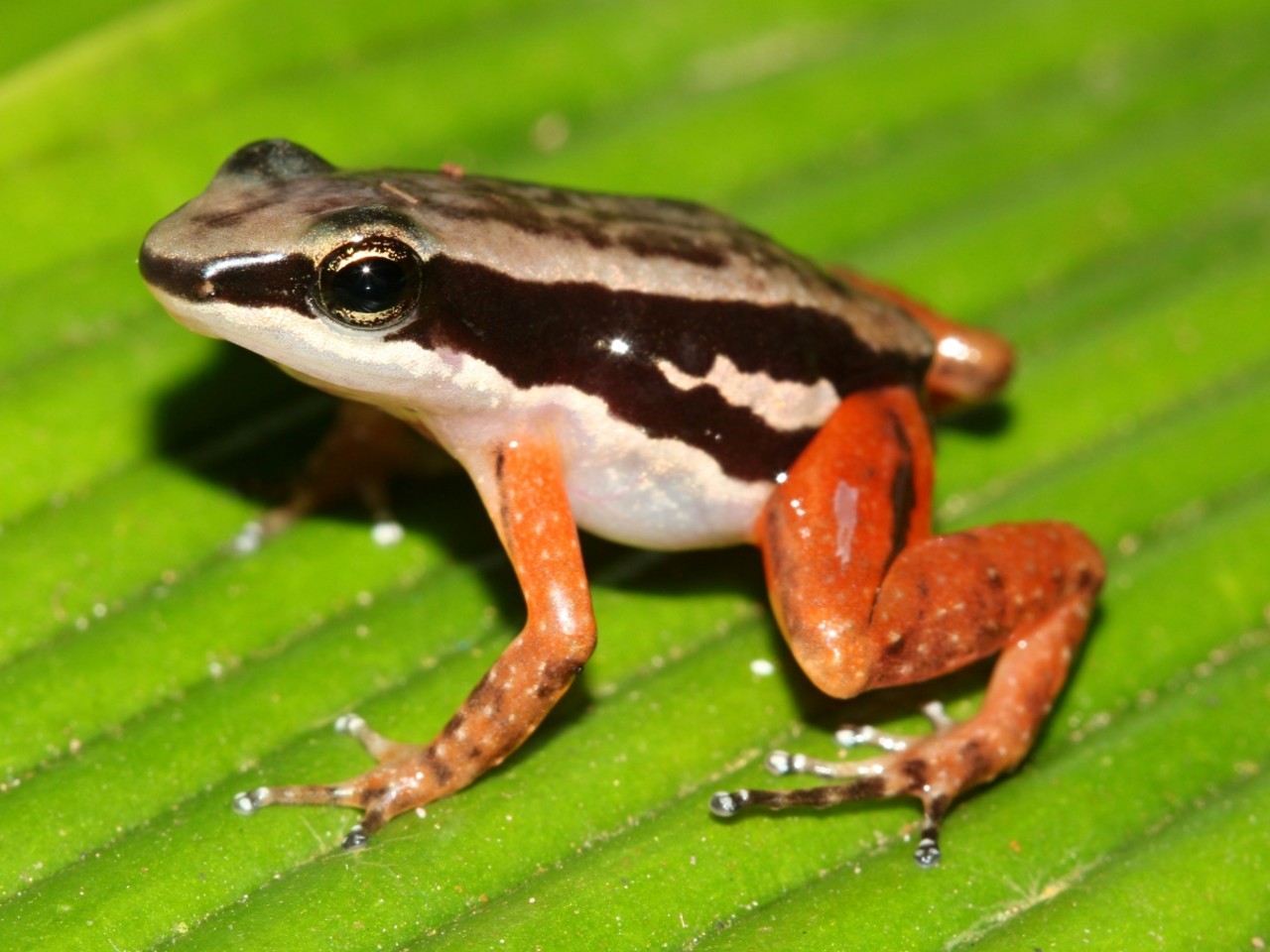
Six previously unknown species of frogs from the Dendrobatidae family were discovered and scientifically described in Panama by members of an international research team led by Milan Veselý from the Department of Zoology at the Faculty of Science, Palacký University. The results of their research were published in the prestigious journal *Vertebrate Zoology*. These are representatives of the genus Colostethus, which, unlike its colourful relatives, comprises predominantly inconspicuously coloured species.
The research has shown that the frogs, which scientists had for decades considered to belong to a single, widely distributed species, actually belong to several distinct evolutionary lineages related to another species of the genus Colostethus. Their distinctiveness has been confirmed by genetic analyses, comparisons of physical characteristics and the vocalisations of the males. The discovery not only expands our understanding of Central America’s biological diversity but also highlights the importance of protecting the region’s natural habitats.
Although the newly described species bear a striking resemblance at first glance, their evolutionary histories are distinct. The scientists have named the new species Colostethus bocatoro, Colostethus donosensis, Colostethus kuara, Colostethus portobelensis, Colostethus sanblasensis and Colostethus chucantiensis after the regions where they are found. They gathered the data required for their scientific description during several demanding expeditions to remote and often hard-to-reach areas of Panama.
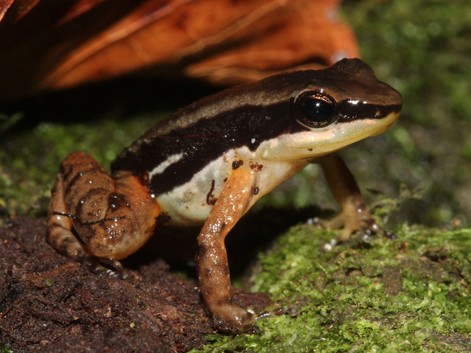
“Our discovery has increased the number of scientifically described species of the genus Colostethus from eleven to seventeen,” said PhD student Tadeáš Venkrbec from the Department of Zoology, the study’s lead author, who played a key role in the research. According to Milan Veselý, however, the main objective was not merely to expand the list of known species, but above all to shed light on the evolutionary history of this group of amphibians, which is closely linked to the complex geological development of the Isthmus of Panama, which connects North and South America. He also pointed out that the tropical forests of Central America probably harbour a number of other as yet undiscovered amphibian species.
The frogs’ vocalisations helped scientists distinguish between individual species
The researchers focused on frogs which had long been classified in Panama as belonging to the species Colostethus pratti, originally described from Colombia. However, experts had been doubting their true identity for several decades. The taxonomic uncertainty was only resolved by combining genetic analyses, field research and the study of the frogs’ vocalisations. It was the calls of the males that proved to be one of the most reliable characteristics for distinguishing between individual species. Their chirping sounds differ in length, cadence, frequency and number of notes. These differences play an important role in the mutual recognition of individuals during the breeding season. Although the frogs are very similar in appearance, the combination of several independent research methods has enabled them to be reliably distinguished.
The newly described species inhabit various parts of Panama, from the western province of Bocas del Toro to the mountainous regions of the Darién on the border with Colombia. Their diversity is linked to the geographical isolation of the populations. Mountain ridges, valleys and lowlands have long restricted contact between the frogs, thereby creating the conditions for the gradual emergence of distinct species. According to the molecular clock, the ancestors of the frogs studied diverged from their South American relatives more than three million years ago. The subsequent diversification of the Panamanian lineages then took place during the Pleistocene. The study thus provides valuable insights not only into the evolution of amphibians, but also into the significance of the Isthmus of Panama for the historical connection between the animal communities of North and South America.
Four new species are threatened with extinction
“According to current knowledge, all six new species have a relatively limited geographical range. Some populations inhabit only small areas and are therefore particularly vulnerable to environmental changes,” added Milan Veselý from the Department of Zoology.
The authors of the study also point out that four of the six newly described species meet the criteria for classification as threatened. Further research will be required to definitively assess the extent of their threat status, particularly monitoring the size and trends of individual populations. However, the results already confirm that understanding true species diversity is an essential prerequisite for effective nature conservation. Without knowledge of the identity and distribution of individual species, it is impossible to reliably assess their level of threat or propose effective measures for their conservation.
The research was carried out by Tadeáš Venkrbec, Milan Veselý and Dominik Kusý from the Department of Zoology at the Faculty of Science, Palacký University, together with colleagues from universities in Panama and Colombia. The results of their collaboration are summarised in the scientific study “Six new species in the Colostethus latinasus group (Anura: Dendrobatidae) highlight hidden biodiversity in Panama”, published in the prestigious journal *Vertebrate Zoology*. The research was supported, amongst other things, by internal grants from Palacký University and the Erasmus+ programme, which facilitated academic mobility between the Czech Republic and Panama.