The extreme heatwaves of recent years, the floods of September 2024, and the tornadoes in the Břeclav and Hodonín regions. Natural disasters leave their mark not only on the landscape and property, but also on the mental well-being of those who have experienced them. Whilst emergency aid usually ends once the immediate danger has passed, long-term consequences, such as anxiety, fears of a recurrence or a loss of security, often remain unaddressed without systematic support. The new CLIMMAID app, being developed in collaboration between researchers from Palacký University and the VŠB – Technical University of Ostrava, aims to offer personalised support in the form of an AI chatbot counsellor to those struggling with the psychological impacts of climatic and environmental events.
How can artificial intelligence help people with mental health difficulties and tailor support to the individual? This is precisely the question being addressed by a team of experts led by Lukáš Novák from the Olomouc University Social Health Institute (OUSHI) at the Cyril and Methodius Faculty of Theology, Palacký University.
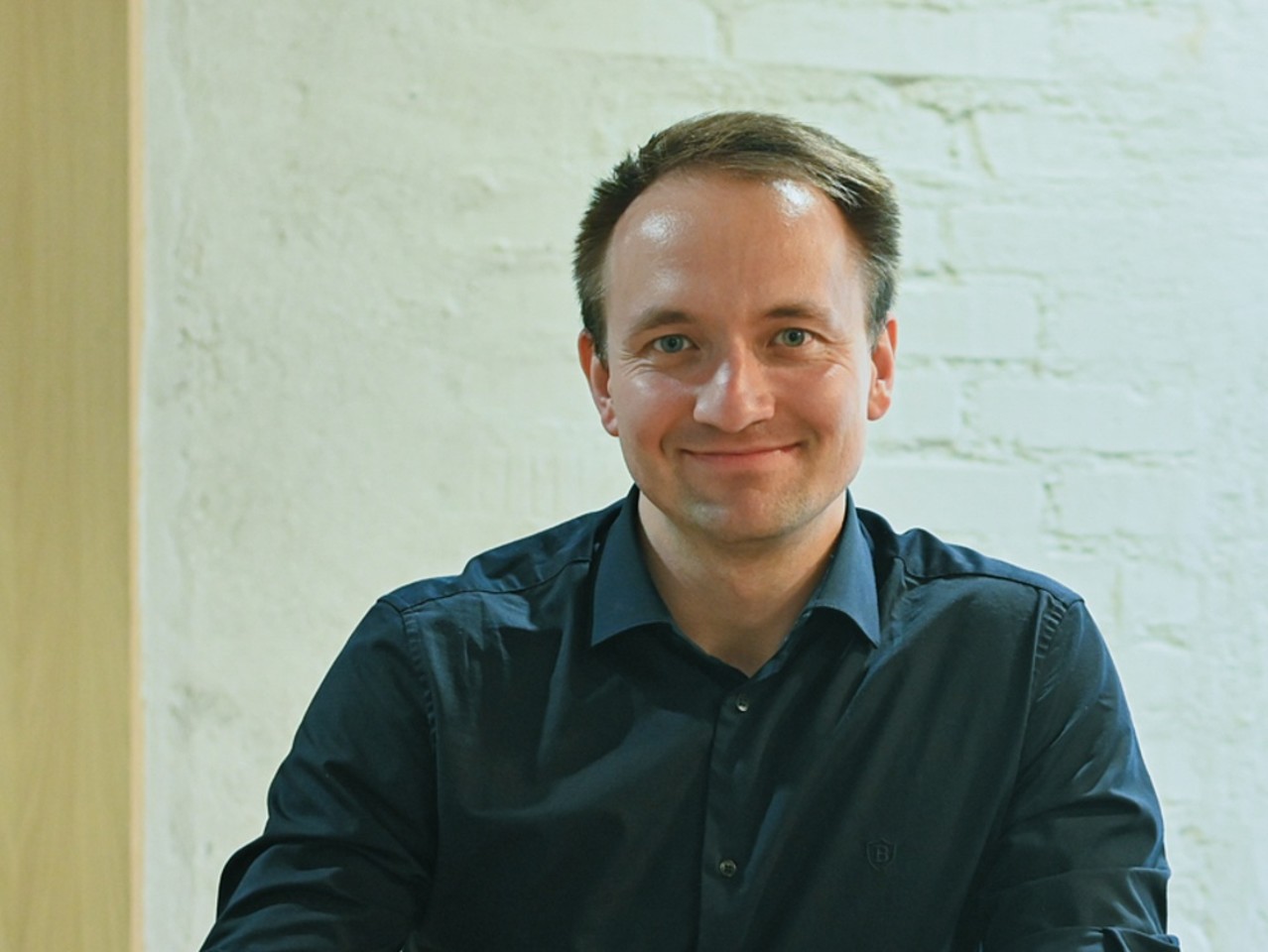
“I am interested in whether we could predict mental illness in a similar way to how we currently forecast the weather, with a certain degree of uncertainty. And just as weather forecasting works better in some parts of the world than in others, this could also work for people,” said the principal investigator, outlining his long-term research vision, on which the project is based. The CLIMMAID app, meanwhile, focuses on a more practical task: personalising support based on information about a specific user and their current mental state. This interdisciplinary project, which brings together psychology, behavioural sciences, data analytics and AI, has been supported by the Technology Agency of the Czech Republic.
At present, the app features a fully functional ‘onboarding’ process – an introductory section that collects the basic data required to personalise subsequent support. A key component, currently being tested, is the ‘mood tracker’, which asks users about their current mental state and mood several times a day via a short questionnaire.
“This is incredibly important because people differ dramatically from one another in terms of which mental states can influence others. For me, a poor night’s sleep might precede a feeling of stress, but that might not be the case for you,” explained Lukáš Novák, adding that support cannot be effectively personalised without taking these individual differences into account.
“The language model takes in information about the issues the user is facing, assesses their mental states throughout the day, and selects the most appropriate intervention from the catalogue.” Lukáš Novák
Data from both the onboarding process and the mood tracker is then analysed by artificial intelligence in the context of information about the user in question – much like when prescribing medication, for example. “We know which antibiotics are available, what effects they have and how long it takes for them to work. The language model takes in information about the problems the user is facing, assesses their mood throughout the day and selects the most appropriate intervention from a catalogue of options,” explained Lukáš Novák, describing the app’s mechanism. The project thus builds on the broader trend towards personalised care in psychotherapy and medicine – that is, the effort to tailor support to the needs of a specific individual.
The Department of Psychiatry at Olomouc University Hospital is also involved in the development of CLIMMAID, acting as the application’s guarantor within the project. “One of the most likely scenarios is that psychologists and psychiatrists will recommend the app to people who have been affected by a natural disaster and are seeking help. In situations where waiting times are long, they may offer patients the chance to try it out,” said Lukáš Novák. The hospital’s involvement is also intended to help assess how the app could be usefully applied in wider clinical practice once it is completed, for example as a supplementary tool for people awaiting specialist help.
The team is also considering follow-up research. In collaboration with the University of Ulm, it is seeking funding for a follow-up project. This would relieve users of the need to regularly fill in questionnaires – the model would ask questions directly only at moments of uncertainty; otherwise, it would attempt to estimate mood from data passively collected by the phone. A decision on funding for the follow-up project will be announced at the end of 2026.
The CLIMMAID app is expected to be available on Google Play and the App Store in the future. Basic mental health monitoring should be available free of charge to all users. The advanced part of the app, featuring a chatbot consultant, may be subject to a fee following a trial period.
The project CLIMMAID – Research and development of an AI application to mitigate the psychological impacts of natural and environmental events is funded under the TA ČR SIGMA programme, Sub-objective 3 – Support for the innovative potential of the social sciences, humanities and the arts (SHUV).
The lead beneficiary is Palacký University in Olomouc; another project participant is the VŠB – Technical University of Ostrava; and the application guarantor is Olomouc University Hospital.
Implementation period: 1 September 2025 – 31 December 2027.
Principal investigator for Palacký University: Lukáš Novák, Olomouc University Social Health Institute, Palacký University (OUSHI).