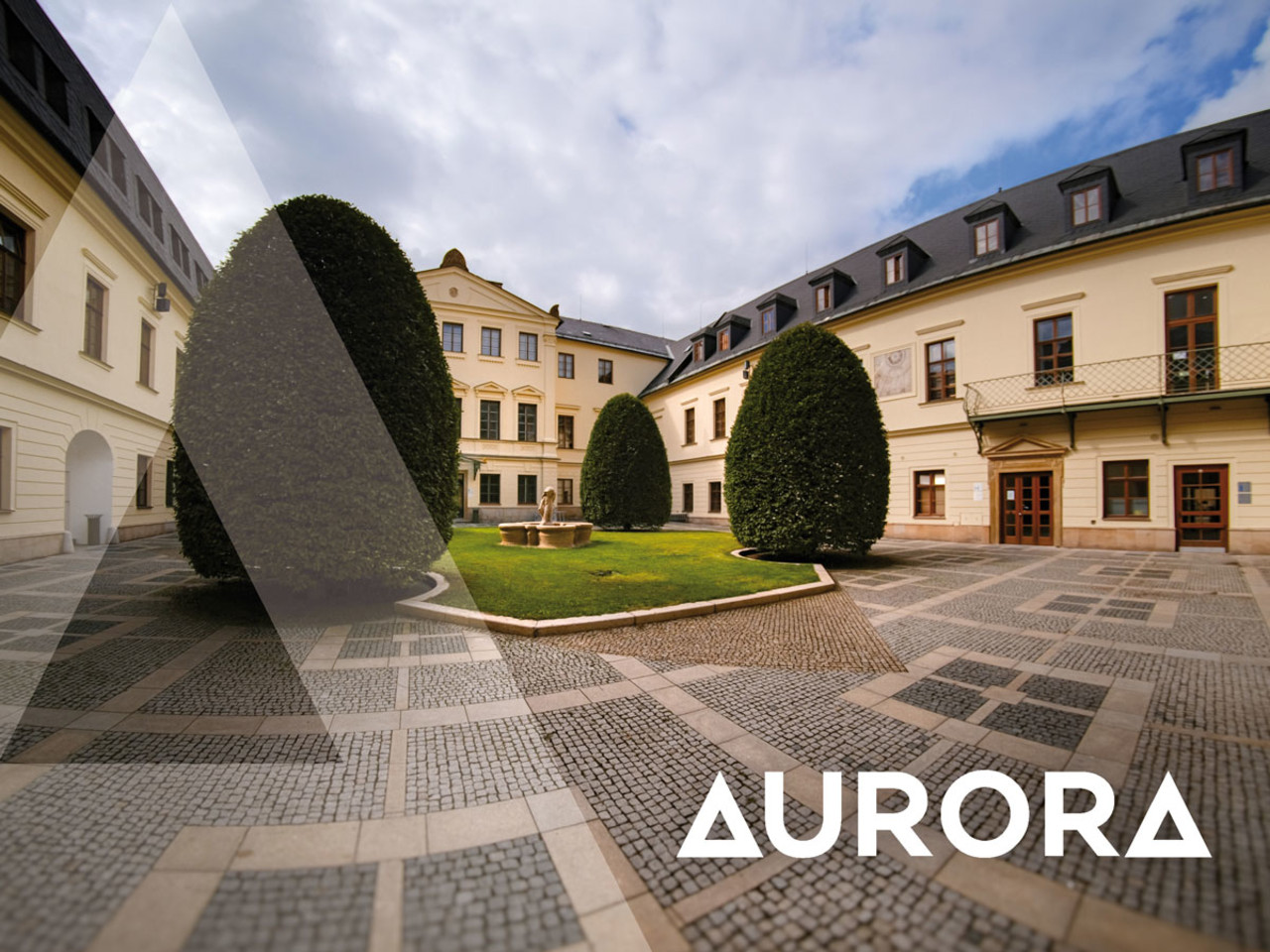
Palacký University is to take on a leading role in the Aurora European university alliance. At a meeting in Amsterdam, rectors of the partner universities elected UP as the coordinating university for the next project phase, running from 2027 to 2029. The decision recognises the sustained efforts of UP’s students, academics and Aurora team. It strengthens the university’s standing in Czech and European higher education and brings new responsibility for developing joint teaching, research and cooperation across the alliance.
UP’s first task will be to coordinate a joint application to the European Commission for funding for a further two years of cooperation. The new grant is intended to follow on from the current Aurora 2030 project, whose funding ends in October 2027, and support joint international teaching, research collaboration and other activities until October 2029.
Working with its partner universities, UP will draw up an activity plan and budget, and take over from the University of Iceland as coordinator of the follow-on project. Together with the Aurora Central Office, it will coordinate the partner universities’ work, liaise with the European Commission and administer the grant, including distributing funds among the partners.
“I am delighted that we have earned the trust of our partner universities and will take on the leadership of the Aurora alliance for its next two-year phase. I will not pretend that reaching this point was entirely straightforward. We had to make a strong case for our candidacy, convince colleagues at the other universities and demonstrate that Palacký University has the ambition, expertise and experience to lead the alliance. That makes the outcome all the more rewarding,” said Rector Michael Kohajda, a member of the Aurora Board, the alliance’s executive body. “I would like to thank everyone who helped prepare and present our candidacy, as well as the rectors and presidents of our partner universities for their trust. I see this as a great honour for our university and a responsibility to every member of Aurora. Our task now is to turn that trust into tangible results that benefit our universities, their students and their academic staff.”
The new role builds on UP’s existing contribution to Aurora’s governance. The university already leads one of the Aurora 2030 project’s ten main work packages, which combines work to strengthen the student community with cooperation with partner universities in Central and Eastern Europe. It also leads efforts to establish sustainable long-term funding for the alliance and develops partnerships beyond academia.
“Aurora brings us together around a shared vision and a long-term strategy for strengthening education, research and universities’ contribution to society. Putting them into practice requires us to agree on priorities, coordinate our resources and be willing to adapt the way we work. As the coordinating university, we want to improve communication and create the conditions for successful cooperation that will help us achieve our shared goals,” said Ivona Barešová, Vice-Rector for International Relations.
The next phase of European cooperation
Aurora was established in 2016 as a network of universities seeking to use high-quality education and research to address societal challenges. It has been part of the European Universities initiative since 2020. An initial three-year phase funded through Erasmus+ was followed by the Aurora 2030 project, which brings together nine European universities. The project received a grant of almost €14.4 million for the period from November 2023 to October 2027.
“This election marks an important step for UP. From students and academics to the Aurora Office and university management, UP has distinguished itself through dedication and quality contributions since joining Aurora in 2019. It is wonderful to see our long term rewarded. It is truly a priviledge to help lead Aurora into this new phase,” added Niels Hexspoor, Aurora Institutional Coordinator at UP.
The alliance must submit its application for further funding to the European Commission by March 2027. The two-year funding period is intended to sustain joint activities and bridge the transition to the EU’s next budget period, which begins in 2028. Aurora can apply for up to €7.2 million for the alliance as a whole. Whether funding is awarded, and how much, will depend on the assessment of the application.
Joint courses and research teams
The next phase will build on cooperation that already involves UP students and staff. Students can enrol in online courses offered by partner universities, attend a summer school or short intensive programme, or take part in the activities of the Aurora Student Ambassadors. Aurora partnerships have also led to the creation of the DIGISOC master’s programme.
In research, the alliance helps bring together international teams and develop new projects. Eight projects involving UP secured funding through this year’s open call for research and education. Researchers can also share research resources and infrastructure. The alliance regularly offers academic and non-academic staff opportunities to attend training and meet colleagues abroad.
Find out more about Aurora’s activities at UP at aurora.upol.cz, and explore news and activities from across the alliance at aurora-universities.eu.
Czech universities and European university alliances
European university alliances enable institutions to develop teaching, research and services for students and staff together. They create joint degree programmes, share expertise and facilities, and expand opportunities for international experience. For internationally oriented universities, alliances have become an important part of long-term development and efforts to strengthen their competitiveness.
There are currently 65 alliances receiving support across Europe, with 14 Czech higher education institutions taking part. UP was among the first four Czech participants in the initiative, joining the Aurora alliance in 2019. It has also been a full member of the Aurora Network since May 2022. Martin Procházka, then Rector of UP, served as Aurora President from 2024 to 2025.
UP’s election as coordinating university further strengthens its standing among its European partners. This role relates to the European project and is separate from the Aurora presidency, currently held by Margrethe Jonkman, President of the Executive Board of the Vrije Universiteit Amsterdam. The Aurora Central Office in Amsterdam will continue its role in centrally managing Aurora's activities and will be a key partner for UP coordinating the project.