
Four students from the Faculty of Science of Palacký University Olomouc (PřF UP) together with two academics actively participated in the third edition of the Blended Intensive Programme (BIP) CIRCLE in Naples. This prestigious programme, entitled "Circular Infrastructures for Regenerative Cities and Local Ecosystems," took place from 20 to 24 April 2026 at the Department of Architecture (DiARC) of Federico II University in Naples, within the framework of the Aurora University Alliance and funded by the Erasmus+ programme. Alongside Palacký University, the event brought together representatives from other European universities of the Aurora Alliance, including the host institution, Federico II University in Naples.
Successful Representation of UP
Our students Natálie Lipová (Geoinformatics), Vladana Mickertsová (Geography and Regional Development), Jan Bystroň (Teacher Training in Geography and Mathematics), and Josef Křesala (Landscape Protection and Management) were fully engaged in the student section of the BIP and ranked among the participants who stood out for their expertise and skills, for example in the creation of highly specialized maps. Nikola Medová from the Faculty of Science at Palacký University (KRES) and Pavlína Flajšarová from the Faculty of Arts at Palacký University (KAA) served as visiting professors in the academic section of the BIP, where they led networking activities and research discussions. Their involvement highlighted the interdisciplinary strength of UPOL in the fields of geosciences, landscape planning and sustainable development, as well as cultural studies and literature.
A Rich Programme with a Focus on Practice
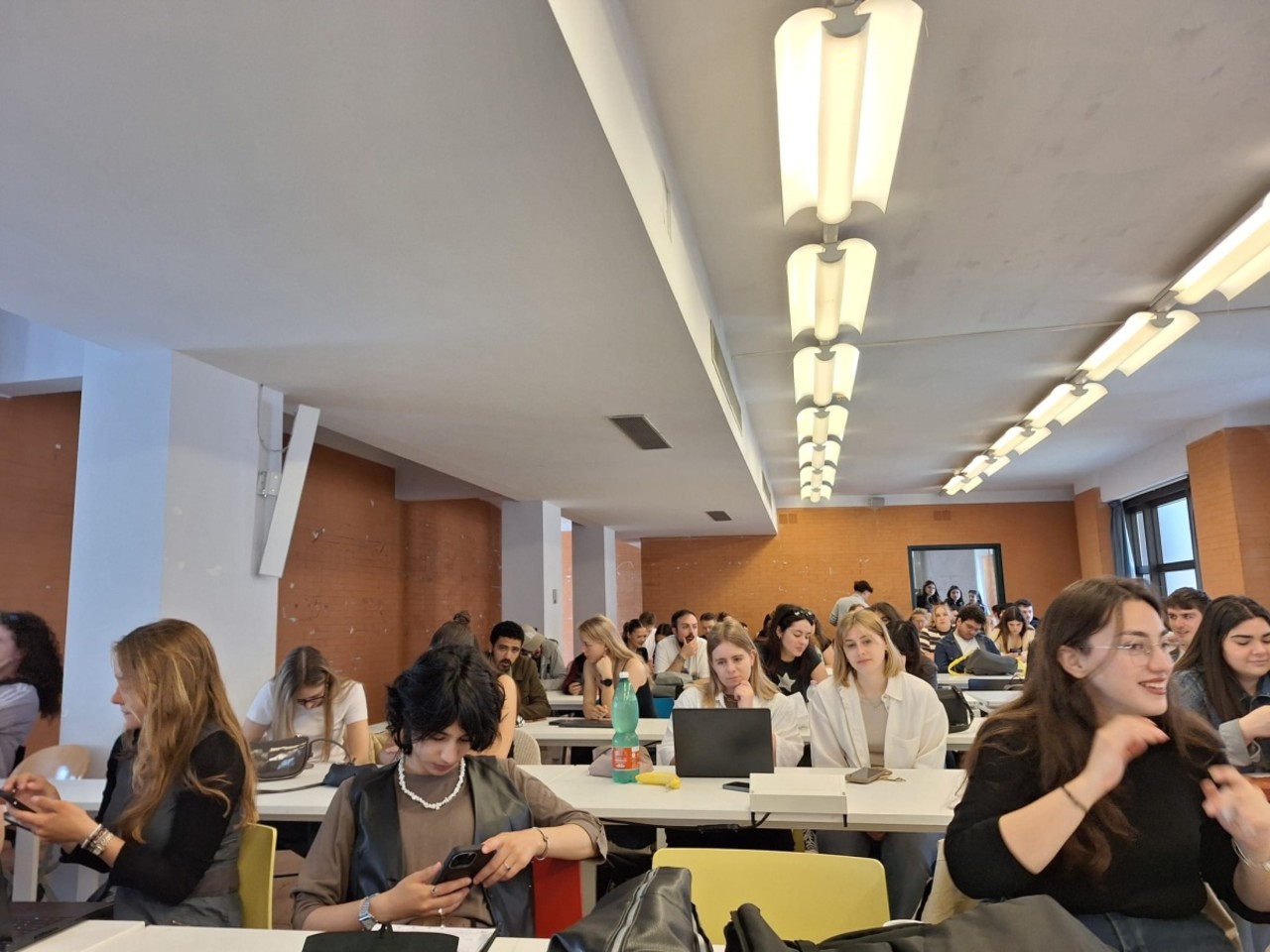
The programme included introductory workshops presenting key challenges and case studies, as well as inspirational lectures by international experts, among them Dario Minervini (a critique of the circular economy metaphor), Robert Steiger (issues of overtourism), and Anna Attademo, Marina Rigillo and Giuliano Galluccio (metabolic research on the San Giovanni a Teduccio district). Students worked in international teams under the guidance of tutors (Rosaria Iodice, Federica Paragliola and others), progressing through staged assessments, a mid-BIP review and final outputs in the form of a scientific poster and presentation. In parallel, networking sessions were held for academics, with everything culminating on 24 April in final presentations at Palazzo Gravina, followed by an informal farewell gathering for students and academics in the palace courtyard.
Field Work as the Foundation for Design Proposals
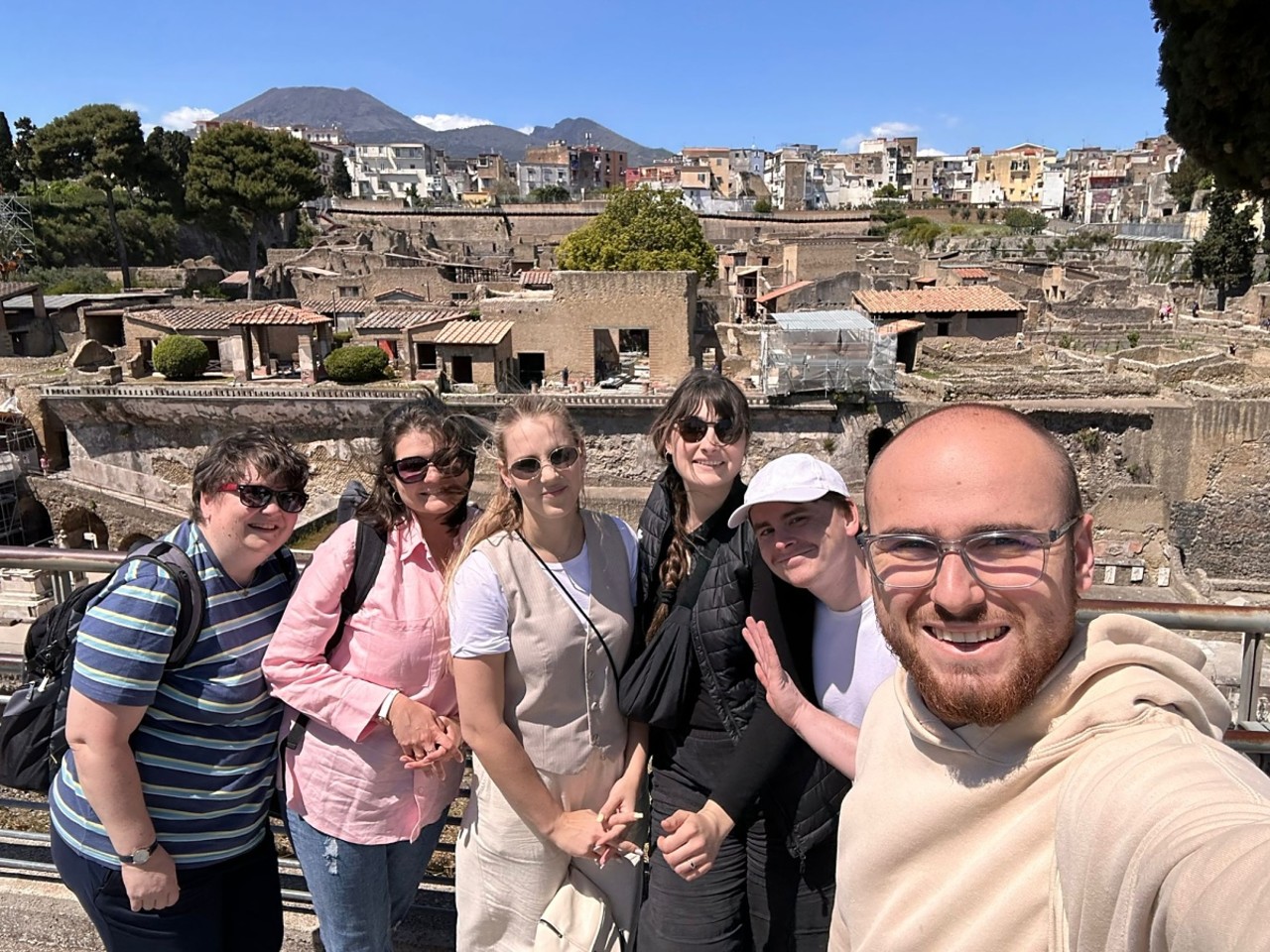
A defining moment of the programme was an extensive field trip on the very first day, 20 April, to the peripheral neighbourhood of San Giovanni a Teduccio. Participants visited Officine San Carlo (Stradone Vigliena 23A), SuperNEST (Corso San Giovanni a Teduccio 376–378) and NEST (Via Bernardino Martirano 17), where they met with local stakeholders and explored real-world urban ecosystem regeneration projects. Direct engagement with practice provided both a sensory and analytical insight into circular infrastructures, forming the foundation for subsequent team analyses and design proposals. The UPOL participants also undertook additional fieldwork beyond the main study area, deepening their understanding of the Neapolitan context and enabling a comparative perspective on local projects, cultural heritage and its protection. Students thus not only absorbed knowledge but actively applied it in a real-world setting, strengthening their competencies in geoinformatics, regional development and landscape architecture, with meaningful connections to the social sciences and humanities.
Scientific Poster and Presentation Before Expert Stakeholders: The Crowning Achievement
The highlight of the entire week was the outstanding outcome delivered by the student teams: together they produced a scientific poster summarising their research findings and design recommendations for the Naples neighbourhood of San Giovanni a Teduccio. The poster was presented on 24 April during the final review before local expert stakeholders in the De Fusco room at Palazzo Gravina. Those in attendance included representatives from Officine San Carlo, NEST, ASIA, Ciak Si Cuce, Regione Campania and the research institute CNR-IRISS. The work of the student teams was met with an enthusiastic response: the poster was commended for its clarity, interdisciplinary approach and the practical relevance of the proposed solutions. The presentation before real actors in local development was therefore not merely a formal conclusion to the programme, but a genuine encounter between academic research and practice, precisely in the spirit of the CIRCLE project's core philosophy.
Added Value for the Aurora Alliance and the Way Forward
Participation in CIRCLE BIP demonstrated the practical applicability and international visibility of academic activities at Palacký University, while generating new professional connections and up-to-date expertise in the fields of regenerative cities and circular infrastructures. Students gained hands-on skills beyond the classroom, and the academics expanded their research networks within the Aurora Alliance. The programme contributed to European mobility and a culture of sustainability, with a lasting impact on research projects and teaching at both the Faculty of Science and the Faculty of Arts of Palacký University Olomouc.
Doc. Pavlína Flajšarová, Department of English and American Studies, Faculty of Arts, Palacký University